
Choosing among bridge construction companies in the UAE requires looking beyond the finished structure. The most important indicators of long-term performance are found in the engineering, fabrication, inspection, material selection, testing, and approval processes completed before the bridge opens. Waagner Biro Bridge Services applies these standards across the full project lifecycle to support safe, durable, and reliable bridge infrastructure.
• Full traceability of materials, welds, inspections, and test records provides clear evidence that every structural element meets the required quality standards.
• In-house fabrication, certified management systems, Gulf-specific materials, protective coatings, and strict dimensional controls help reduce defects and improve long-term durability.
• Load testing, structural health monitoring, authority compliance, and experience across comparable bridge projects demonstrate whether a contractor can deliver reliable performance throughout the asset’s service life.
A finished bridge gives almost nothing away. Once it carries traffic it looks complete, and from a car window one span looks much like another. Whether it will still be sound in forty years, or need major repair in fifteen, was settled long before it opened, in the design office and the fabrication yard. That is the difficulty in choosing a bridge contractor. The work that matters most is the part you cannot see in the finished photograph. An untested weld. The wrong coating for a coastal climate. A load path that was approximated rather than checked. None of it is visible on opening day, and all of it decides what the bridge costs its owner over the next thirty years.
This is why engineering standards count for more than presentation when you compare bridge construction companies in the UAE. Standards are the evidence that the invisible work was done properly. Waagner Biro Bridge Services has built and maintained bridges across the UAE for over 50 years, and the standards below are the ones worth checking in any contractor before a single beam is ordered.
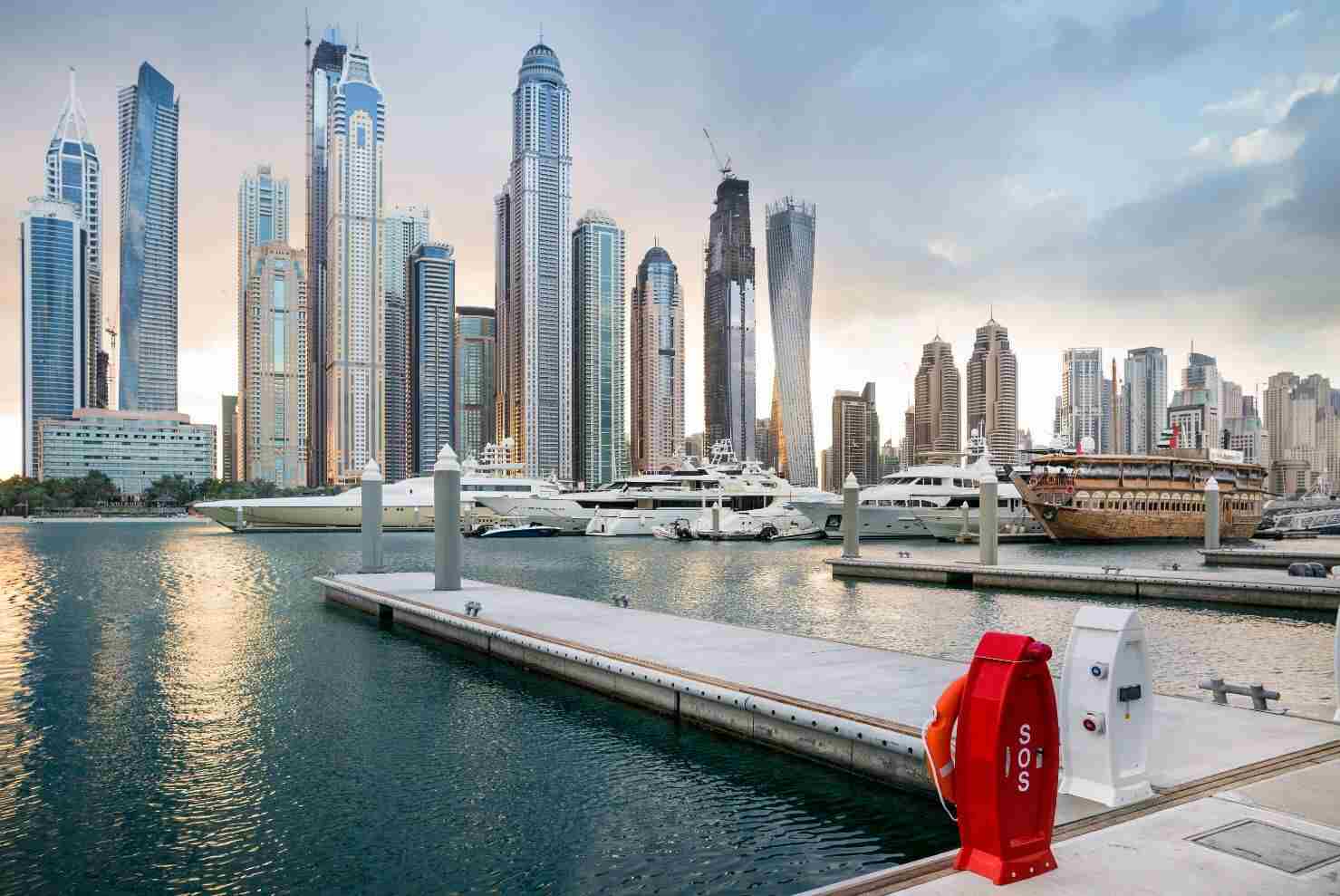
The first standard is one a good contractor will raise before you have to. On any public structure, you need full traceability of materials, welds and inspections, and a serious bridge company treats this as a baseline requirement rather than an optional extra.
In practice, traceability means a few concrete things.
Ask a contractor how they document all of this. The answer tells you quickly whether they build to a standard or to a deadline. Traceability records the quality, but it is the next standard that creates it.
A bridge is only as good as the steel that leaves the yard. The second standard to look for is disciplined fabrication, with consistent weld testing and dimensional checks before any component ships to site.
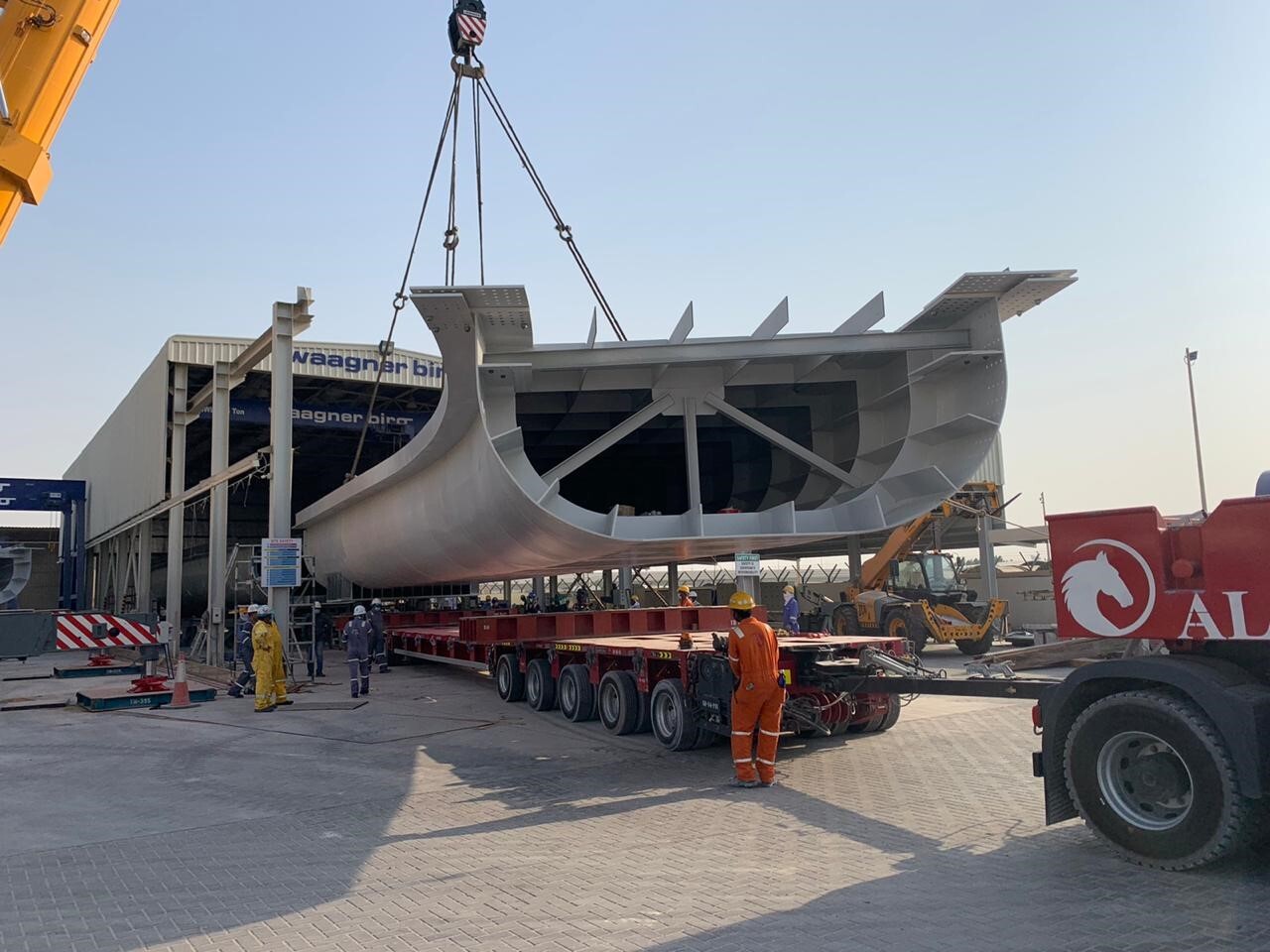
Waagner Biro fabricates in its own facility in Dubai’s Jebel Ali Industrial Area, converting engineering drawings into shop drawings, cutting steel to specified tolerances, welding with tested techniques and applying protective coatings suited to the environment. Doing this in-house, with the engineering and fabrication teams sharing information early, keeps control of quality under one roof rather than spread thin across separate suppliers. It also matters for anything out of the ordinary. Large-format spans and geometrically complex bridges leave little room for error, and a yard that has fabricated them before will plan the cutting, welding and lifting sequence around the tolerances the design demands rather than the other way round. It is worth asking any contractor whether fabrication is in-house or subcontracted, because that single fact changes how tightly quality can be held. Control of this kind is strongest when it sits inside a certified system.

Certification turns good intentions into an audited routine. The third standard is a recognised management system, and Waagner Biro holds ISO 9001 for quality and ISO 14001 for environmental management.
What that signals is simple. Quality is not left to individual judgement on the day; it follows a documented process that an external body checks and re-checks. On a structure the public will use for decades, that difference is not a formality. Recognised international design codes and welding qualifications sit alongside these systems, and it is fair to ask a contractor which ones its work is built to. Standards on paper still have to survive the Gulf, which is where the next one comes in.
A specification that holds up in a temperate climate can fail here. The fourth thing to look for is design and material selection built for the UAE, where saline air, coastal corrosion, extreme heat and thermal movement all work against a structure from the day it is installed.
A capable bridge company chooses materials for that reality and applies coatings suited to the environment rather than a generic finish. It designs for thermal expansion instead of hoping the structure will absorb it. Corrosion control belongs in the design and the maintenance plan, not only in a later repair budget. Get this wrong and no amount of paperwork saves the bridge. Get it right and the proof shows up at handover.
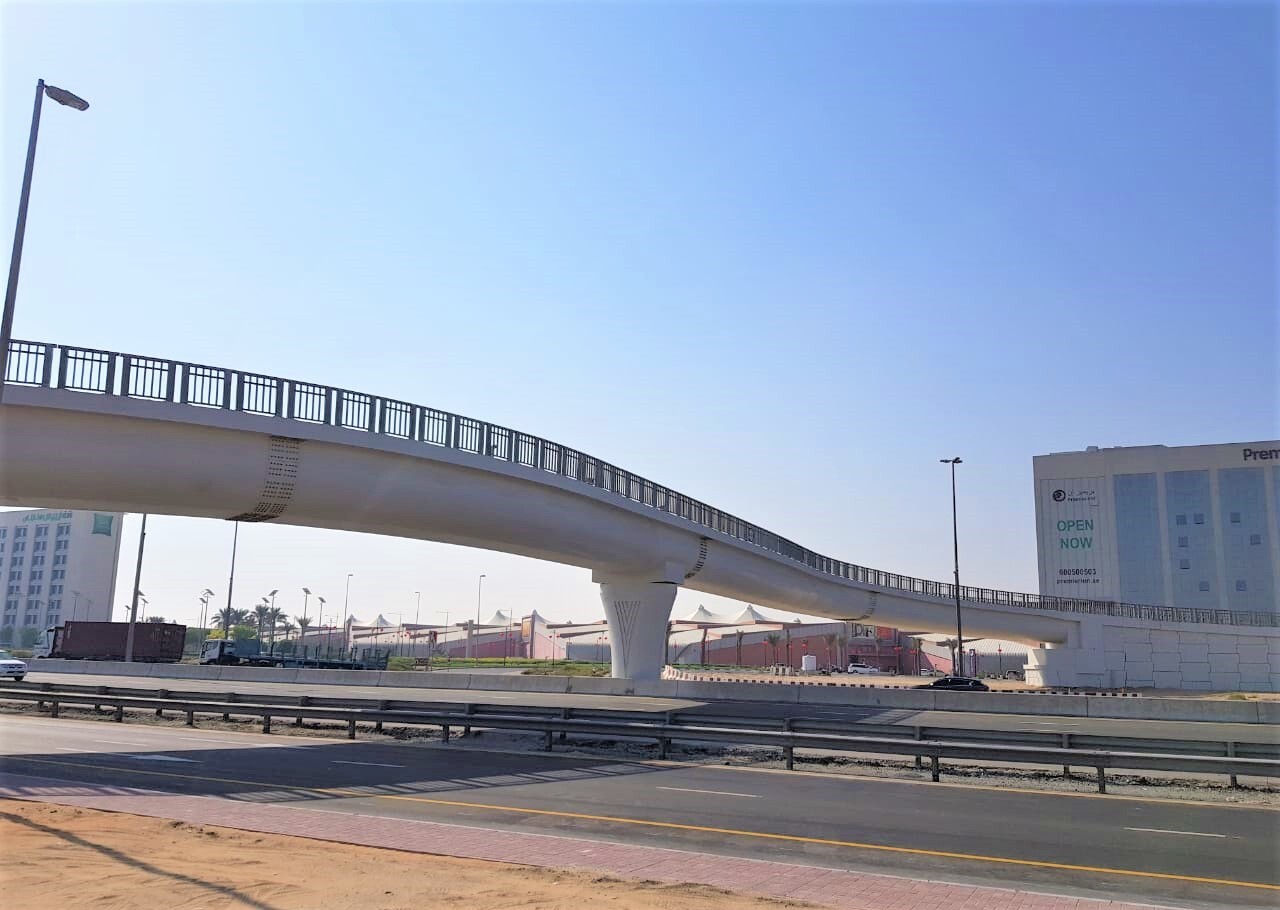
Good engineering can be measured, not just asserted. The fifth standard is verification at handover, through load testing and structural health monitoring rather than a certificate of completion on its own.
Waagner Biro installs monitoring that measures strain, displacement and thermal movement, and sets inspection schedules that follow the structure across its life. Load testing at handover confirms the bridge behaves as the design predicted before it opens to traffic, and the monitoring left in place afterwards catches any drift from that baseline early. Sensors of this kind turn a bridge into an asset the owner can watch rather than one they simply hope is sound. Ask what evidence of performance you actually receive at handover. A confident contractor will have a clear answer, and that performance still has to satisfy the authorities who govern the road.
No bridge in the UAE is delivered in isolation. The sixth standard is fluency with the bodies that set the rules, among them the Ministry of Energy and Infrastructure, the Roads and Transport Authority in Dubai, the Department of Municipalities and Transport in Abu Dhabi and Sharjah Roads.
Each has its own approvals and technical standards, and a contractor that knows how to work within them avoids the delays and rework that catch out less experienced firms. Compliance here is not paperwork for its own sake. It is what lets a project move from approval to opening without losing months in between. Approvals gained cleanly the first time also say something about the contractor, because the same traceability and quality records described earlier are what an authority expects to see. The clearest evidence that a contractor can do all of this is a record of finished bridges.
Every standard above is easier to trust when a contractor has already met it, more than once, on real structures. The final thing to look for is a track record on bridges comparable to your own.
Waagner Biro’s UAE portfolio includes structures such as the ADNEC Bridge, the Al Maqta Bridge, the Trade Centre Footbridge, the Yas Marina hotel access bridge and Za’abeel Bridge, across pedestrian, special and movable bridge types. A record like that is not a guarantee on its own, but it shows the standards have been applied in the field rather than only described in a proposal. It also shows range. A contractor that has delivered across those types has solved a wider set of problems than one that repeats a single stock design, and that breadth is what you draw on when your own project does not fit the usual mould.
No single standard tells you enough by itself. Traceability without fabrication control, or certification without a track record, leaves a gap that tends to surface years later, once the bridge is carrying load. Read together, these seven describe a contractor that builds for the whole life of the structure, not just the day it opens.
Waagner Biro Bridge Services brings more than 50 years in the UAE, a group engineering heritage of over 165 years, and more than 5,000 completed projects to that standard of work. If you are planning a bridge and want to hold it to these standards from the first drawing, speak with our engineering team today to discuss your project.