
Reliable water infrastructure depends on coordinated repair and maintenance across pumping stations, storage tanks, and treatment plants. Waagner Biro Bridge Services provides structured repair and maintenance services across the UAE and Qatar, combining preventive maintenance, corrective repairs, asset monitoring, and 24×7 emergency response to support long-term system reliability.
Every drop of water that reaches a tap in Dubai or Doha has already passed through a chain of engineered assets. Pumping stations push it through the network. Storage tanks hold it ready through the heat of the day. Treatment plants take the wastewater back and make it safe to release. When one link in that chain weakens, the whole network feels it.
Gulf conditions make the chain hard to protect. Salt air and humidity attack steel and concrete all year round, while summer demand leaves equipment little time to rest. Asset owners across the UAE and Qatar have learned that one-off fixes cannot keep pace with this environment. What works is a structured programme of repair and maintenance services that treats the network as one system.
Waagner Biro Bridge Services plays a direct role in this space. Our teams operate and maintain pumping stations, water tanks, wastewater treatment plants and sewage plants across the region, backed by 24×7 emergency maintenance. Before walking through those assets one at a time, it helps to see why the network holds up better under one maintenance programme than under a handful of separate ones.
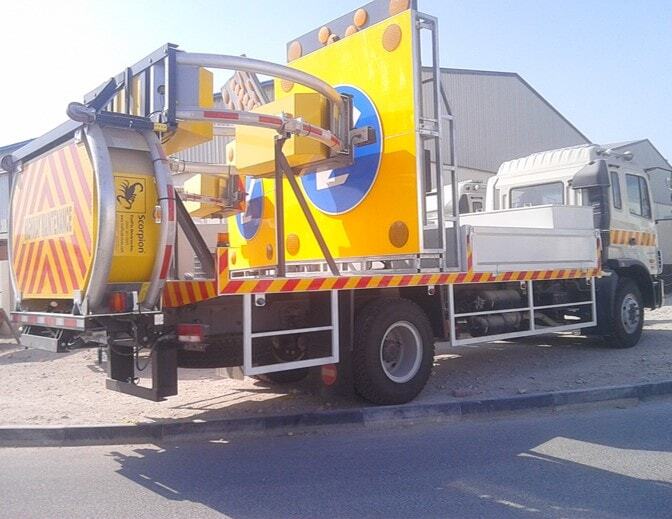
Maintenance contracts are often awarded asset by asset. One contractor looks after the tanks. Another services the pumps. A third gets a phone call when the treatment plant trips at night. Each may do reasonable work in isolation, yet nobody is watching the system as a whole.
Water networks do not fail in isolation. A pumping station running below capacity changes the pressure profile across every tank it feeds. A tank pulled offline for unplanned repair pushes extra duty onto the stations around it. At the end of the line, the treatment plant inherits every upstream problem.
A single maintenance partner working from shared inspection data can read those connections and plan around them. Shutdowns land where the network can absorb them. Recurring faults get traced to their real cause instead of collecting a patch twice a year. Over time the owner gets fewer surprises and a longer life from every asset. The case is easiest to see by following the water itself, starting where it first enters the network under pressure.
Pumping stations do the work that gravity cannot. They lift potable supply to where it is needed and move sewage towards treatment, and they rarely get permission to stop. In a region where water treatment companies manage intake, treatment, storage and delivery on a daily cycle, a station standing still is a problem measured in hours, not weeks.
Routine servicing keeps that from happening. Our operation and maintenance teams handle the recurring work that keeps a station online.
Pump station servicing also sits inside our wider infrastructure maintenance work. The same discipline that keeps drainage stations running under Dubai’s roads applies to the stations that feed residential districts and industrial plants.
In Qatar, this discipline runs around the clock. Our teams deliver 24×7 operation and maintenance across the country’s water infrastructure, covering pumping station servicing, water tank inspection and repair, preventive maintenance planning and emergency response for system failures. The service model matters as much as the technical work. A station operator who knows exactly who answers the phone at 2am, and how quickly a crew can mobilise, plans with more confidence than one holding a list of separate suppliers
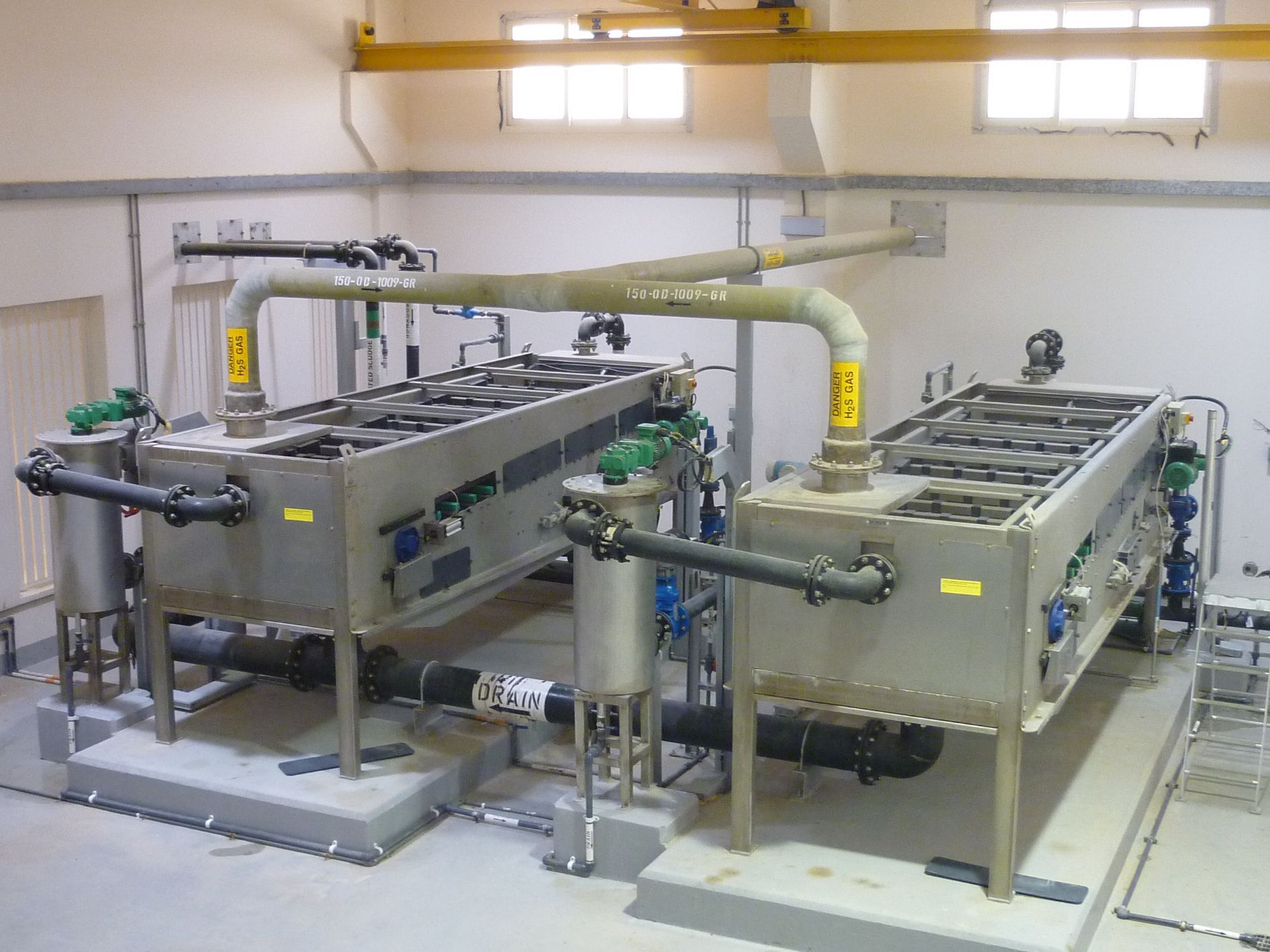
Water leaving a pumping station rarely runs straight to a tap. It waits in a storage tank, and that tank is the next asset in the chain to protect. The right time to repair a water tank is before it fails a water quality test. Steel and concrete tanks in coastal Gulf climates face constant corrosion pressure, and small defects grow quietly. A coating breach becomes surface rust. Rust becomes pitting. Left alone, pitting becomes a leak, and a leak in a potable tank is a contamination risk as much as a water loss.
Inspection comes first. Our teams assess tank condition inside and out, from coatings and welds to inlet and outlet fittings, and document every defect with its severity. Repairs are then planned in order of risk. Some can wait for the annual shutdown. Others justify draining the tank this month rather than facing an emergency next year.
Because water tank repair and maintenance is a named part of our operation and maintenance scope rather than an occasional job, the work follows the same preventive, corrective and annual maintenance checklists we apply across the network. That same standard is the thing to test when you decide who repairs the tank in the first place.
Asset owners comparing tank maintenance companies in the UAE and Qatar tend to hear similar promises. A few practical tests separate the field.
Ask who diagnoses the defect. An engineering-led company inspects and explains before it quotes, so you know whether you are buying a patch or a fix. Then look at what stands behind the workmanship. Waagner Biro operates ISO 9001 quality and ISO 14001 environmental management systems. It is also worth knowing where the steel comes from. Our fabrication facility in Dubai’s Jebel Ali Industrial Area produces replacement components in-house, which shortens repair timelines and keeps quality under one roof.
Regional record matters too. A company that has worked in the Middle East for over 50 years has already seen what this climate does to tanks, and has adjusted its methods accordingly.
The last test goes back to where this article started. Ask whether the company can maintain what the tank connects to. A tank specialist who never sees the pumping station upstream or the treatment plant downstream is working with half the picture. When the same partner holds inspection data across the whole network, a recurring tank defect can be traced to a pressure problem two assets away, and fixed once instead of patched annually. Two assets downstream, at the far end of that network, sits the plant that inherits whatever the tanks and stations send it.
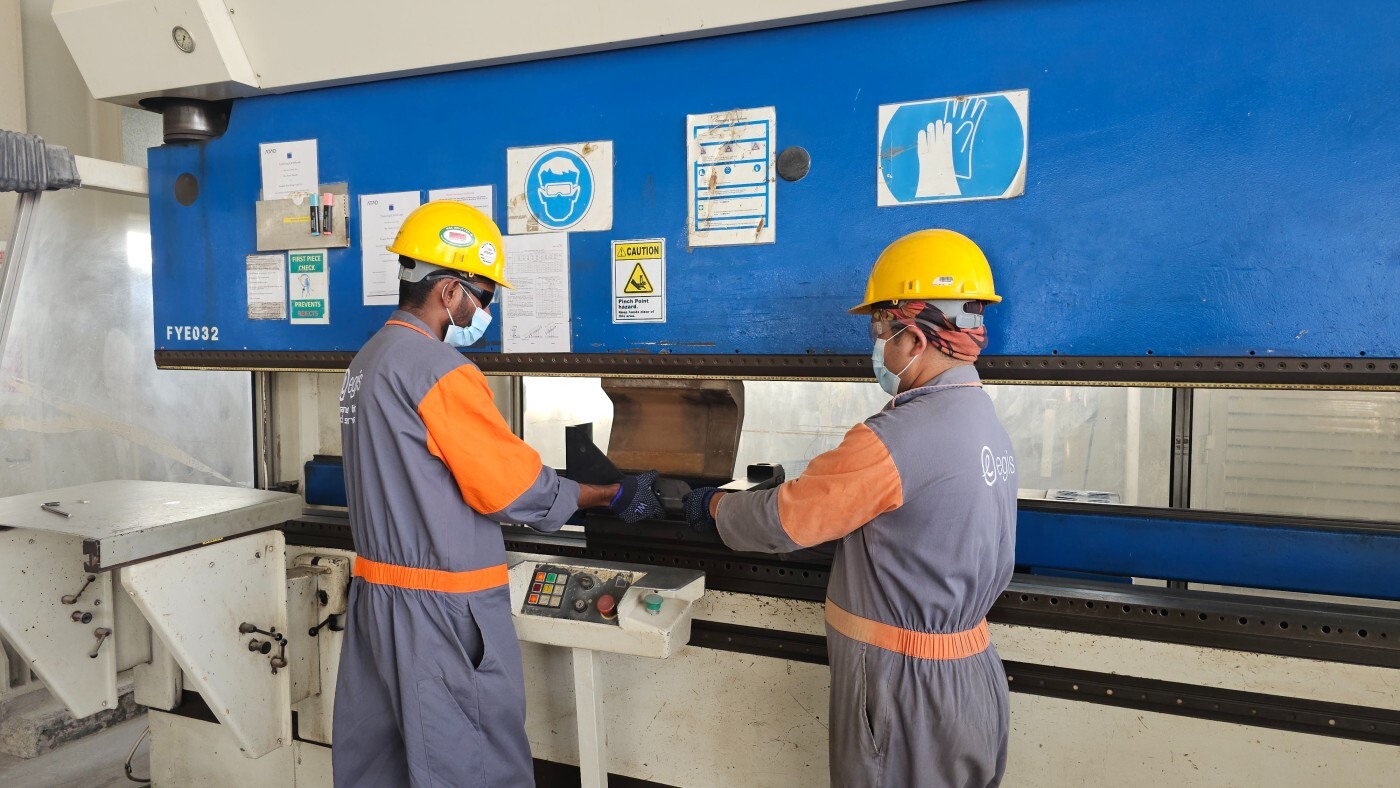
That inheritance is a demanding one, which is why growth in Doha, Lusail and Al Wakrah has increased demand for reliable wastewater treatment services. These plants treat domestic sewage and industrial effluent so that groundwater and marine discharge areas stay protected.
The pressure is not limited to the wastewater side. Water treatment companies in the Gulf convert raw groundwater or desalinated seawater into potable supply, managing intake, treatment, storage and delivery, often on a daily cycle. There is no slack season in that calendar. Maintenance has to be planned into the operation itself rather than bolted on when something breaks.
Waagner Biro provides operation and maintenance for wastewater treatment plants and sewage plants as a core service. Daily work covers the mechanical and process side of the plant, from pump and filter checks to the cleaning of sedimentation tanks, with performance tracked through SCADA monitoring. The objective is steady, compliant throughput day after day, in a sector where a missed day is visible to regulators and residents alike. Across the pumping station, the tank and the plant alike, that daily work sorts into three recognisable layers.
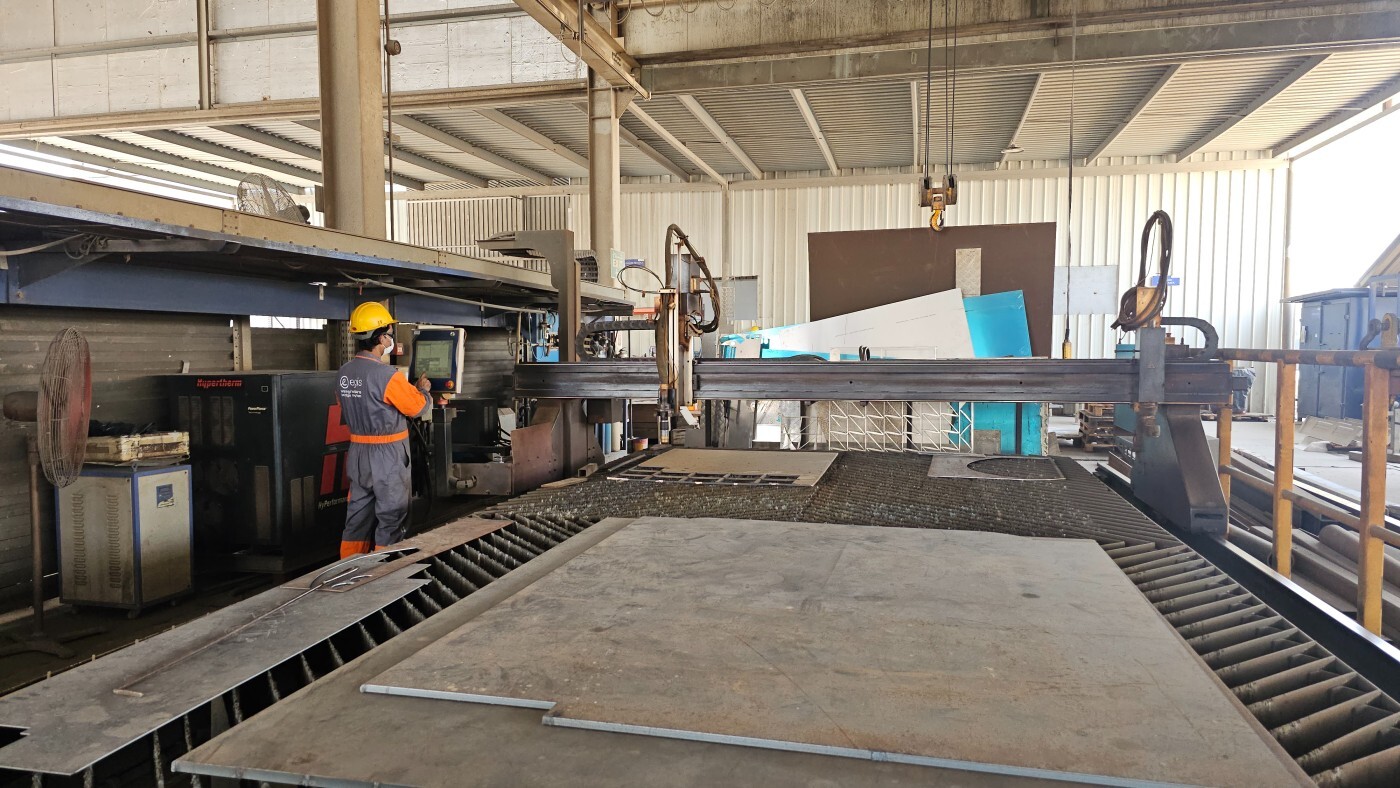
Full-scope repair and maintenance services work across those three layers, and mature asset owners budget for all of them.
Preventive maintenance is the planned layer. Inspections and servicing follow annual maintenance checklists, so deterioration is caught while it is still cheap to correct. Corrective maintenance is the scheduled response, where a known defect is repaired at a time the network can afford. Emergency response is the layer nobody wants to use. Failures rarely respect working hours, so our teams provide 24×7 emergency maintenance across the assets we cover.
The three layers reinforce one another. Strong preventive work means fewer emergencies. Honest corrective work means the same fault does not return every season. Owners who fund only the emergency layer end up paying for it twice. Running all three well, across every asset from the pump to the plant, is far simpler under one roof than across several suppliers.
That single roof is what Waagner Biro Bridge Services offers. The company has spent more than five decades in the Middle East, supported by a group engineering heritage of over 165 years and a record of more than 5,000 completed projects. Government agencies and private asset owners across the UAE and Qatar use that experience to keep pumping stations, water tanks and treatment plants performing under real Gulf conditions.
If you are responsible for water infrastructure that cannot afford downtime, speak with our team today to plan repair and maintenance cover across your whole network.