
Construction companies in the UAE play a central role in turning national development plans into the infrastructure that supports trade, mobility, utilities, tourism, and long-term economic growth. Through local engineering capability, climate-resilient construction, efficient project delivery, and lifecycle maintenance, companies such as Waagner Biro Bridge Services help create and protect the physical assets the economy depends on.
The UAE’s growth story is usually told through its skyline. The more useful way to read it is through what holds the skyline up. Roads, bridges, ports, water networks and coastal defences are the physical layer beneath every headline about trade, tourism and investment. Before a free zone signs a single tenant or a port moves a single container, someone has to build the thing that makes the activity possible. That work belongs to the country’s construction sector.
Construction companies in the UAE do more than assemble structures. They turn national ambition into working assets, keep those assets running for decades, and build engineering capability inside the country as they go. For over 50 years, Waagner Biro Bridge Services has been one of the construction companies in Dubai and across the UAE doing exactly that, delivering construction engineering across bridges, steel, marine works and water infrastructure. What follows is how that kind of work translates into economic growth and national development.
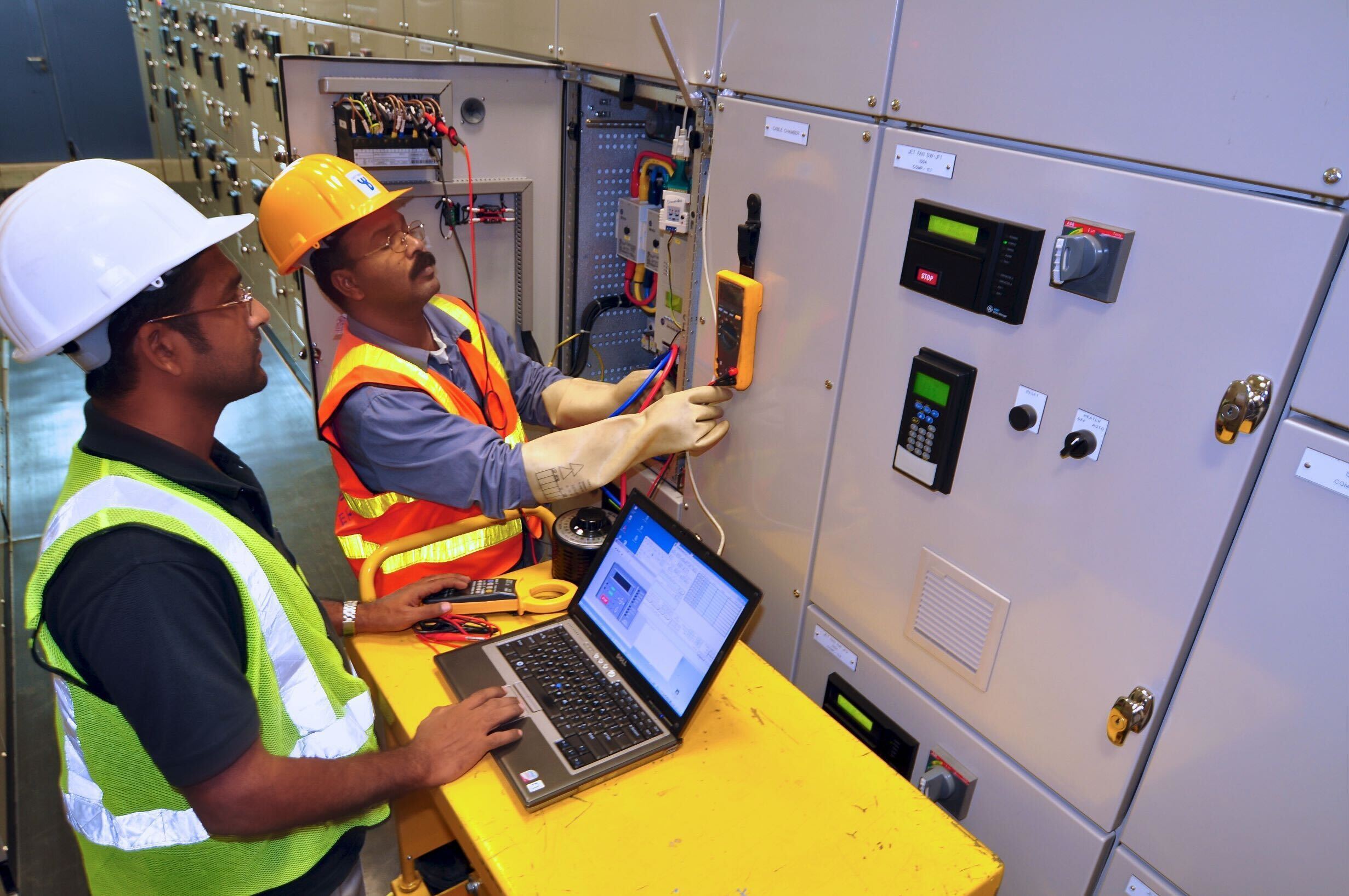
Every part of a modern economy rests on physical infrastructure. Goods move on roads and bridges, trade passes through ports, and cities run on water and power networks that most people never see. A port is only as valuable as the roads and bridges that connect it to the rest of the country, and a new district only functions once its utilities are in the ground.
This is the first way construction drives growth. It builds the platform that every other sector stands on. When a contractor completes a bridge or a treatment plant, the benefit does not stop at the structure; it shows up in the businesses it supports, the goods it carries and the daily trips it shortens. National development, in practical terms, is the sum of that enabling work.
The pattern repeats at every scale. A logistics zone needs the road and bridge links that let trucks reach it around the clock. A new residential district needs the water and wastewater systems that make it habitable before the first family moves in. None of it registers as growth until it is built, which puts the construction sector at the start of almost every economic story the country tells.
That story starts with ambition, and ambition on its own does not move anything. The UAE’s long-term development and diversification strategies depend on infrastructure to make them real, and infrastructure depends on companies that can deliver it. Bridge construction in the country is shaped by rapid urban expansion and the economic need for resilient transport links, which is exactly the kind of demand a strategy creates and a construction company has to answer.
This is where construction companies in the UAE do their most direct work for the national project. They take a stated priority, whether a new transport corridor, a coastal defence or a water scheme, and convert it into steel, concrete and working systems. Waagner Biro contributes across that range, from bridges and steel construction to marine and coastal works and water infrastructure.
Delivering at this level also means working inside the system that governs it. Projects answer to bodies such as the Ministry of Energy and Infrastructure, the Roads and Transport Authority in Dubai, the Department of Municipalities and Transport in Abu Dhabi and Sharjah Roads, each with its own standards and approvals. A contractor that can move through that framework turns a public priority into a finished asset without the delays that stall less experienced firms, and delivery speed is itself part of the economic gain.
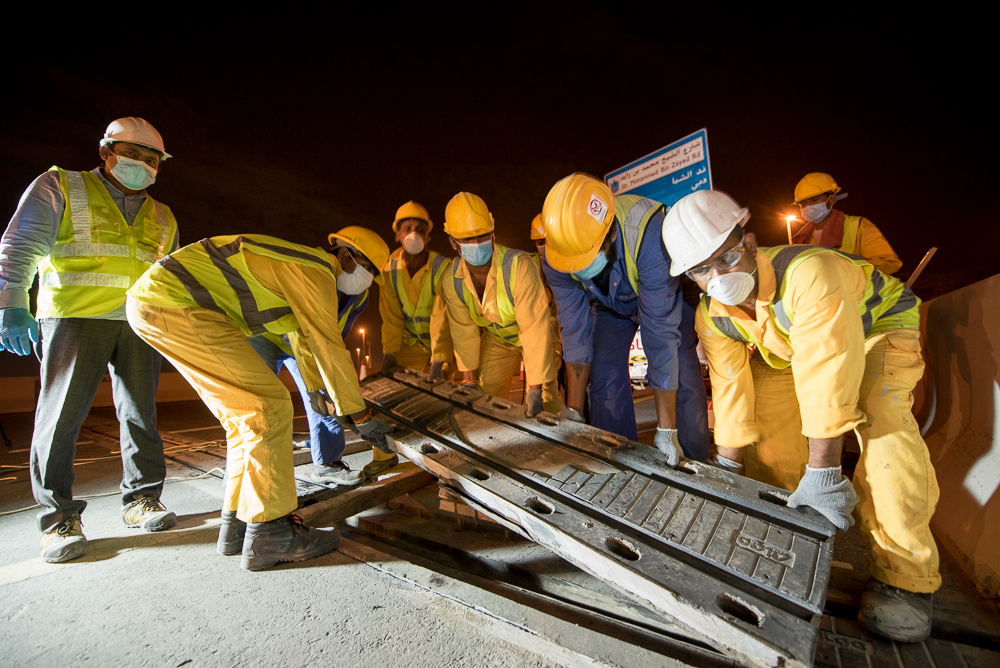
National development is also a question of who does the building. A structure imported in finished form leaves little behind, while a structure engineered and fabricated inside the country builds skills, supply chains and know-how that stay after the project ends.
Waagner Biro runs its own fabrication facility in Dubai’s Jebel Ali Industrial Area, producing steelwork in-country rather than shipping it in. That is the practical meaning of the company’s “Global Experience, Local Focus” position. Local capability of this kind is quiet but compounding, because every project delivered this way deepens the engineering base the next project can draw on. It also keeps skilled work, from steel detailing and welding to project management, employed inside the UAE rather than exported with the order.
Growth cannot pause while the country upgrades itself. In the UAE, roads rarely close fully, traffic volumes stay high, and public tolerance for disruption stays low. No full closures. No pause on the economy while the work goes ahead. Construction has to add capacity without subtracting it in the meantime.
Meeting that demand is a discipline in itself. Staged erection, night installation, partial lane closures, off-site fabrication and close coordination with the authorities all exist so that a bridge can go up while the city underneath it keeps working. Construction companies that can build under live traffic let the economy keep moving during the very upgrades meant to expand it.
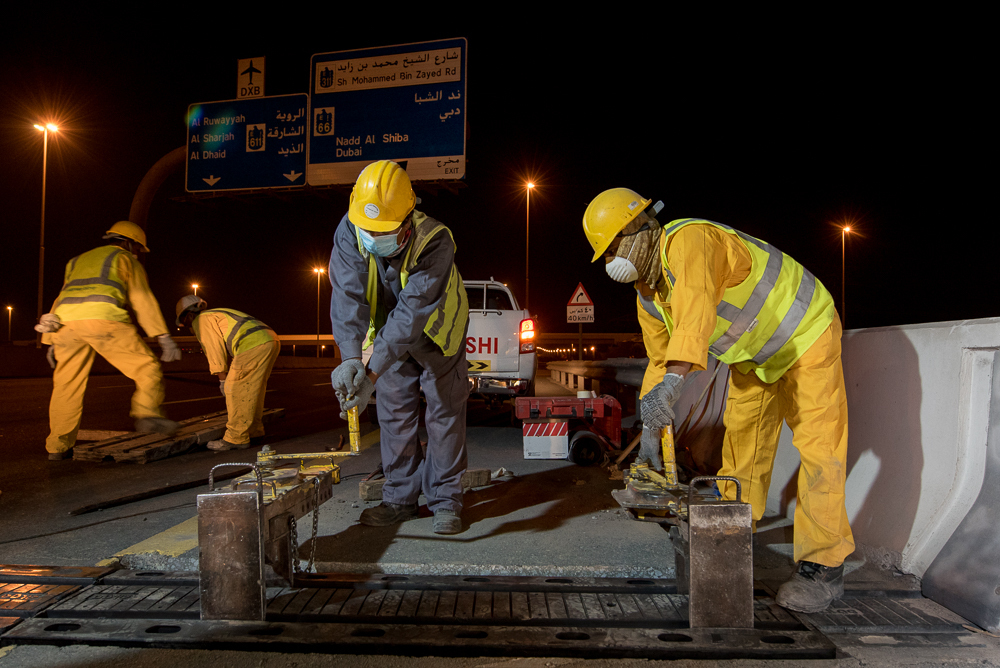
An asset only contributes to growth for as long as it lasts. The Gulf is hard on structures, with extreme heat and thermal expansion, saline air and coastal corrosion, and sandy, shifting soil all working against them from the day they are built.
Construction engineering tuned to these conditions is what protects the investment behind each project. Corrosion-aware detailing, materials chosen for the climate and designs that account for thermal movement are not technical luxuries; they are what keeps a bridge or a plant serving the economy in year thirty rather than needing replacement in year fifteen. Durability, in this sense, is an economic contribution as much as an engineering one.
Modern construction engineering answers these pressures with specific methods. Modular prefabricated steel, steel-concrete composite structures, integrated monitoring and lifecycle maintenance models all exist to make assets last longer and behave more predictably in a demanding climate. The point of each is the same, which is infrastructure designed from the outset to hold its value rather than simply to open on time.
Growth is not only in ports and towers. It is also whether people can move around their own city safely and cleanly, which is why connectivity and active transport have become part of the growth agenda.
Smaller structures carry a large share of this. The Al Awir Cycle Track and Pedestrian Bridge, for example, gives a safe link across a major road and joins residential areas to Dubai’s expanding cycling network. Infrastructure like this serves residents rather than freight, and it shows that construction supports livability and sustainable movement alongside trade and industry. That breadth matters for a diversifying economy, where quality of life is part of what attracts residents, talent and visitors in the first place.
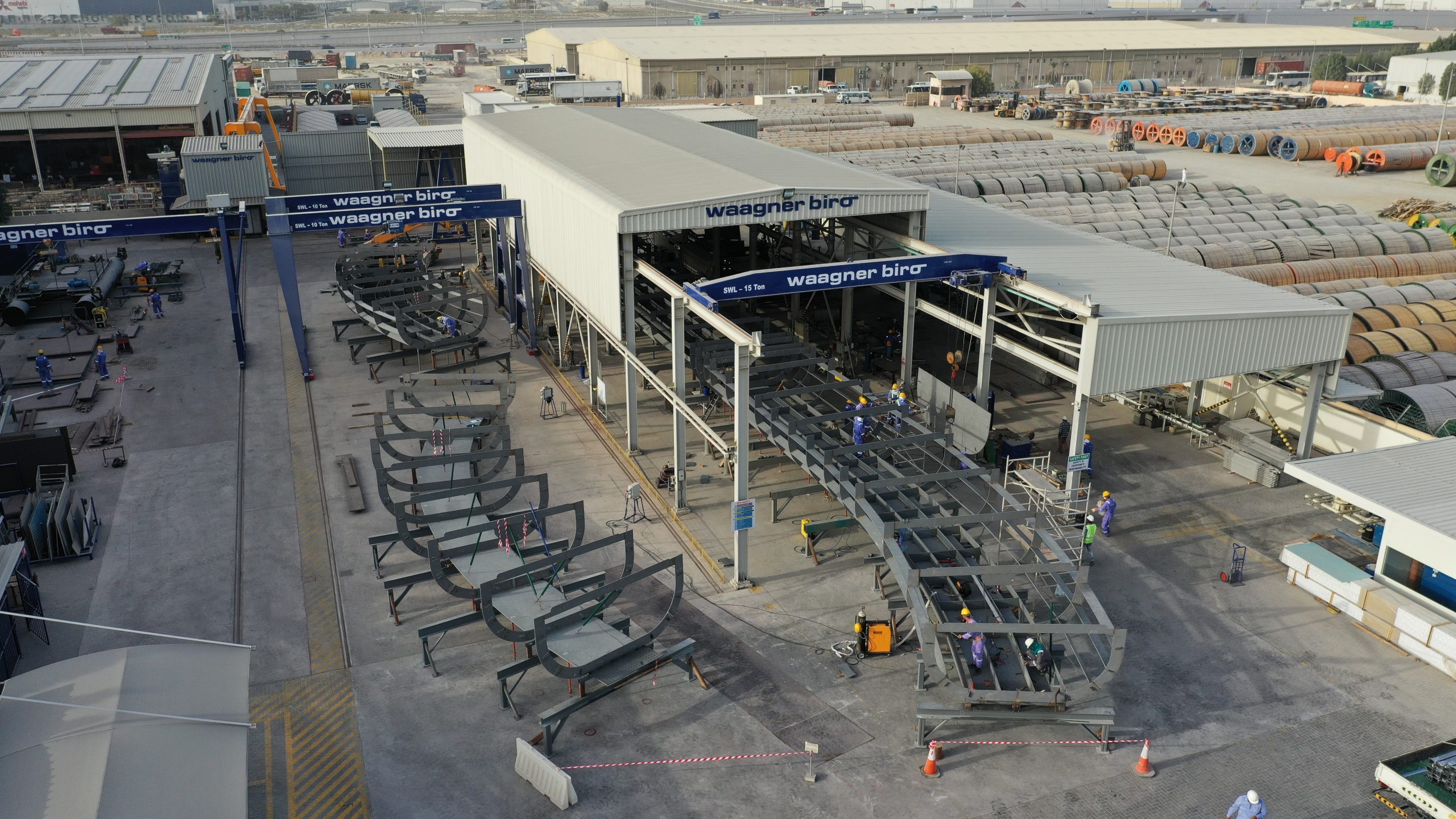
Building an asset is only half of the economic case. Keeping it working is the other half, because a bridge that closes for emergency repairs or a plant that misses its output erases the very value its construction created.
This is why the strongest contribution runs across the full lifecycle rather than ending at handover. Waagner Biro delivers steel engineering across all stages of a project, from ideation to fabrication through to service and maintenance, which means the same discipline that builds an asset also protects it. Well-maintained infrastructure holds decades of national investment in place, quietly, long after the opening.
The UAE’s next phase of growth will ask for the same thing its last one did, which is infrastructure delivered to standard and kept working for the long term. Meeting that demand takes construction companies that combine international engineering experience with a genuine base inside the country.
Waagner Biro Bridge Services brings more than 50 years in the UAE, a group engineering heritage of over 165 years, and a record of more than 5,000 completed projects to that role. If you are planning infrastructure that has to serve the country for decades, speak with our engineering team today to discuss how it should be built and maintained.